Custom laptop
Ducktop2.
A custom 16-inch laptop with an eight-layer motherboard.
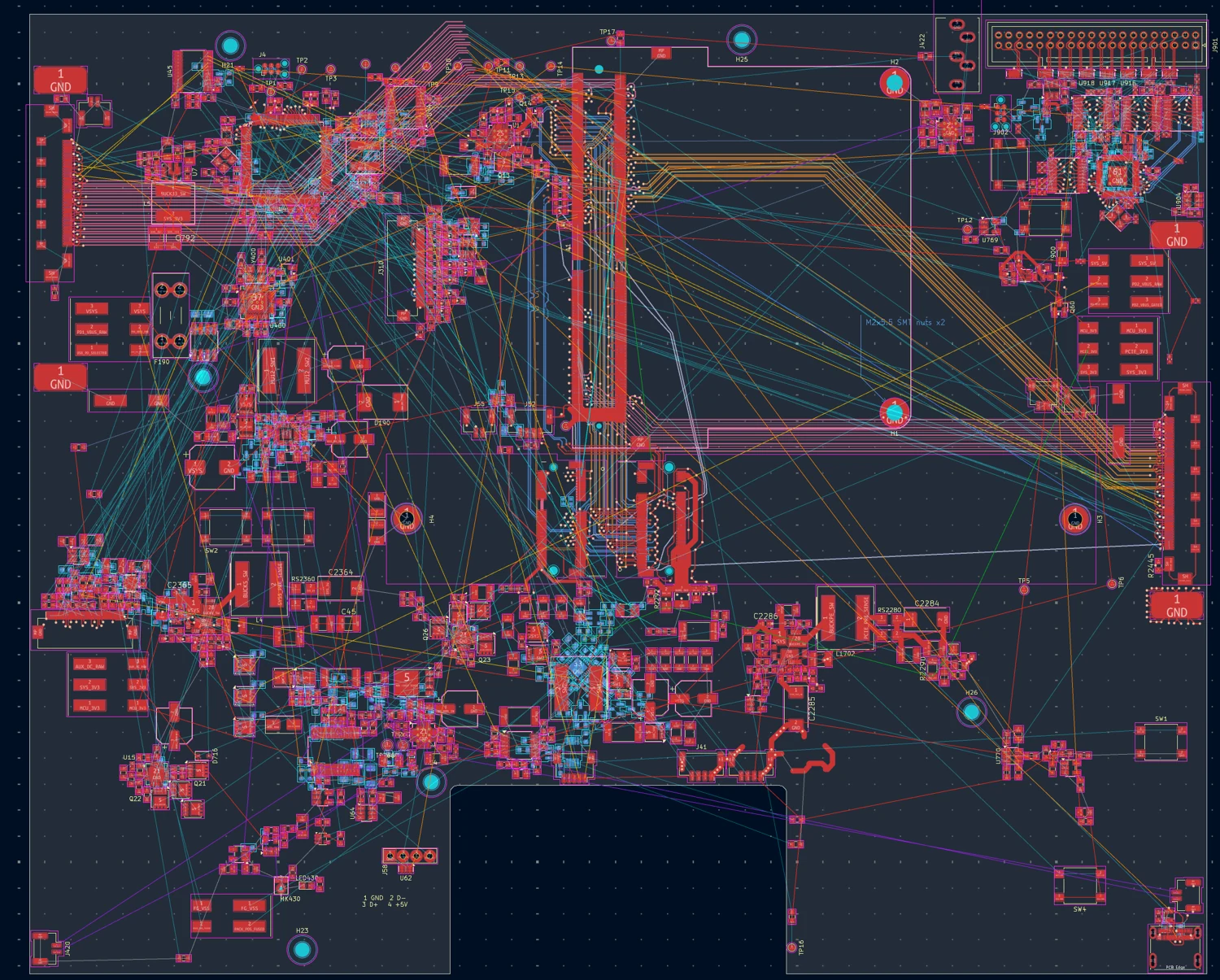
Routing in progress
View source on GitHub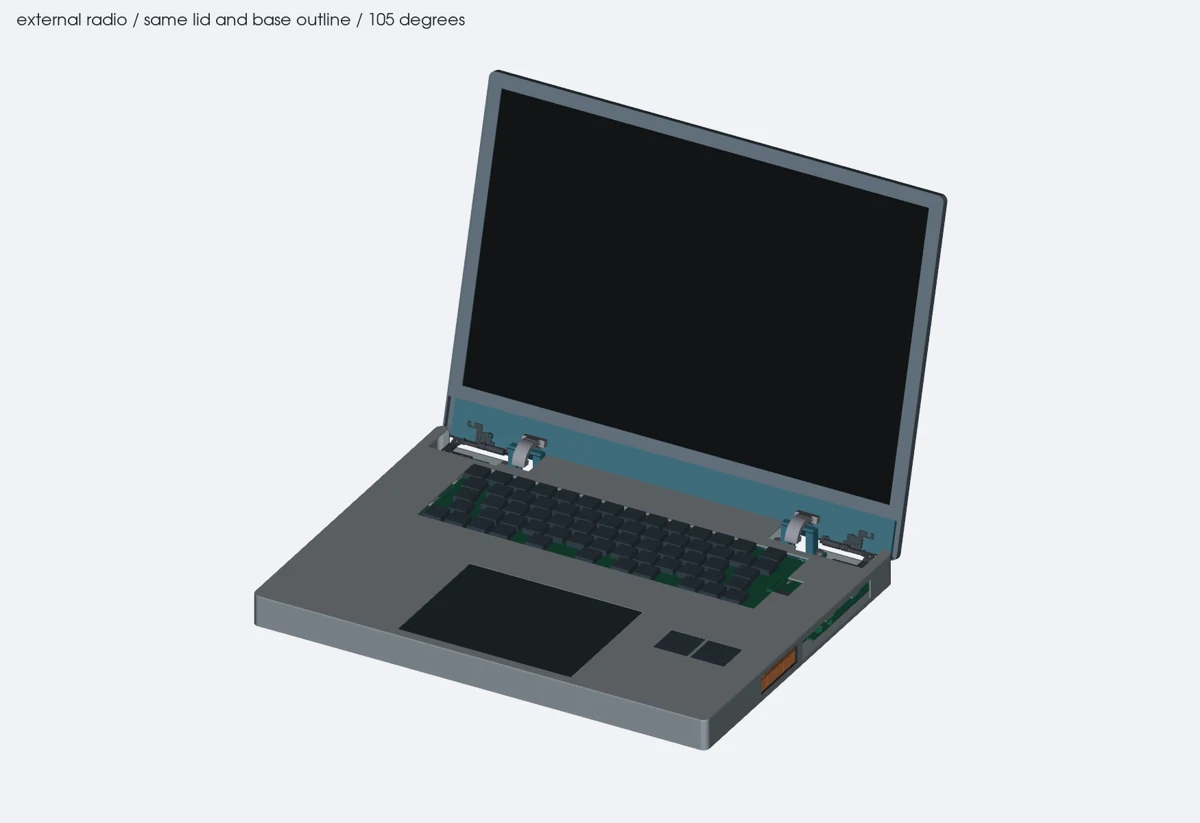
- Display
- 16-inch
- Main boards
- 8 layers
- Compute
- Mu Ultra
- Status
- In progress
I wanted to build a laptop with the exposed hardware and flexibility of a cyberdeck. My earlier build had HDMI and USB-C cables running around the outside. For Ducktop2, I'm designing custom boards for the ports, power, and controls, with a direct eDP connection to the display.
Board layout
The laptop uses a LattePanda Mu Ultra, starting with the 226V module. The center board holds the compute module, embedded controller, charger, and maker microcontroller. The ports are on separate left and right boards. I'm working out how to fit everything around the keyboard, battery, and cooler while keeping the connections accessible.
High-speed routing
The carrier has PCIe for M.2 NVMe, a separate Wi-Fi/Bluetooth socket, and USB, HDMI, and Ethernet connections. I'm routing the differential pairs and checking their reference planes and connector placement. The PCIe routes are saved, but the Mu Ultra pin-map changes and much of the main-board routing still need work.
Power and charging
An ISL9241 charger sits on the center board, with a separate BQ76922 board monitoring the three-cell battery. The laptop and battery charging have to share the available input power. I'm aiming for 100 W over USB-C, but I still need to test the boards, cables, temperatures, and switching between power sources.
Fitting the case
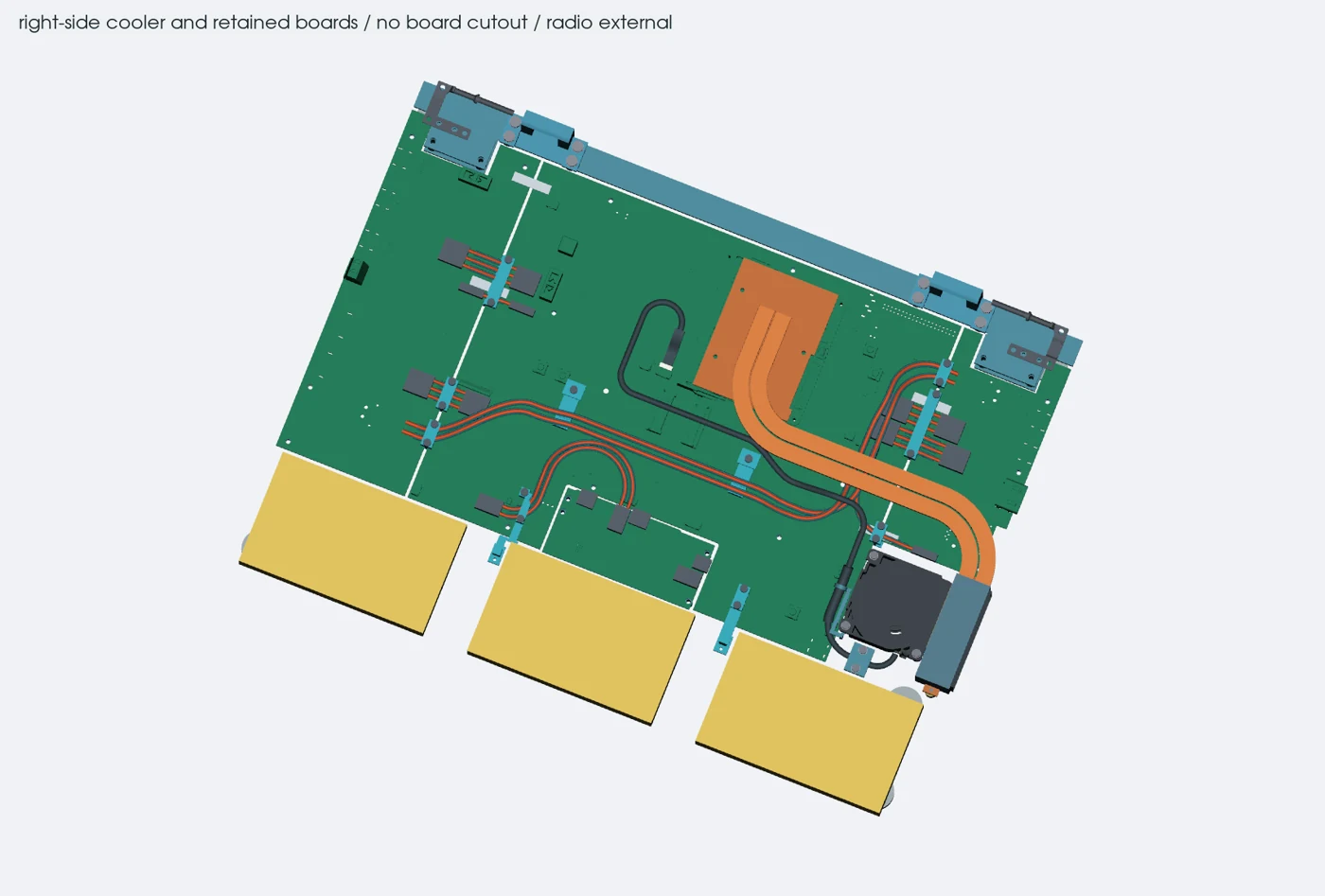
The case CAD includes the display, keyboard, trackpad, boards, battery, and cooling hardware. I've been working on the cooler supports, airflow, cable clearances, and access to the display and keyboard connectors. The fit and cooling still need to be checked with real parts.
Current status
I'm still routing the main boards. The full laptop is not ready for fabrication or power-up. The BMS is routed, but its protection circuits still need bench testing.
Next steps
- Finish main-board routing and review the changed high-speed connections.
- Check the case, cables, and cooler against real parts.
- Make the boards and test the power, charging, protection, and cooling.